Preparing the Way
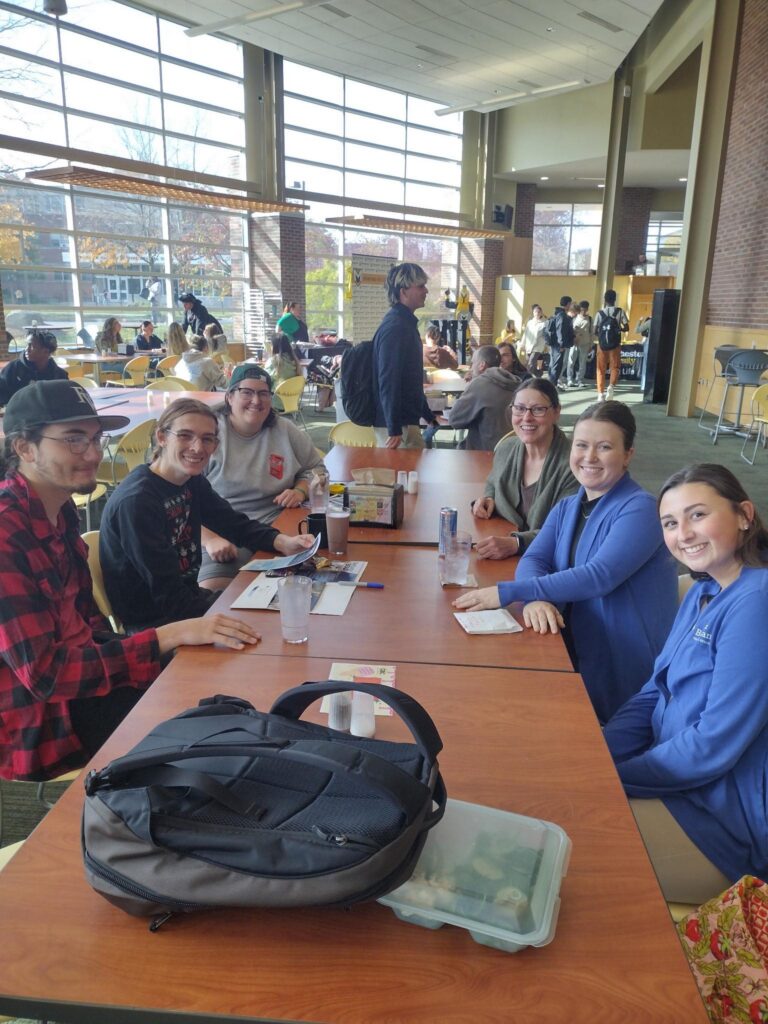
With funding from Lilly Endowment Inc., Bethany Theological Seminary is expanding vocational paths for undergraduate students.
The Lilly Endowment Inc. has cast a remarkable vote of confidence in Bethany with a $10 million grant — the largest in the Seminary’s 120-year history. This new funding will support the Seminary’s new partnership with undergraduate institutions and encourage students to pursue graduate theological education and careers in ministry. The grant marks the beginning of a new era for Brethren higher education, as it will strengthen the connection between the Seminary and the Brethren-related colleges and universities.
This generous philanthropy will establish the Brethren Higher Education Consortium and foster collaboration between Bethany and the six undergraduate colleges and universities that are affiliated with the Church of the Brethren: Bridgewater College, Elizabethtown College, Manchester University, McPherson College, Juniata College, and the University of LaVerne. Bethany has created a new program called UP@Bethany, which will allow juniors and seniors at those institutions to take Bethany courses prior to receiving their undergraduate degrees. The grant will also support continued collaboration with Earlham School of Religion, a key partner of Bethany for the last 30 years. The Lilly Endowment grant will enable Bethany to create an endowed fund, helping to ensure the Seminary’s long-term success.
The new project funded by the Lilly Endowment is entitled, “Preparing the Way: Expanding Vocational Paths for Undergraduate Students.” It is being funded through Lilly Endowment’s Pathways for Tomorrow Initiative. The grant to Bethany is one of 45 that were approved in a competitive round of the initiative to support theological schools as they lead large-scale collaborations with other seminaries, colleges and universities, and other church-related organizations.
The Lilly Endowment — a private foundation based in Indianapolis, Indiana — supports the causes of community development, education, and religion.
“We are thrilled and humbled to receive this transformational grant from the Lilly Endowment,” says Rev. Dr. Jeff Carter, president of Bethany Theological Seminary. “Thanks to Lilly’s generous support, we will create new pathways to careers in ministry for exceptional students attending Brethren colleges and universities. The grant will also allow us to provide students at these institutions an introduction to graduate study and access to advanced courses in theology and Biblical studies that are not typically available to undergraduates.”
Bethany currently enrolls 115 students in five master’s degree programs and nine graduate certificates, including those from across North America and a strong and growing contingent in Nigeria. Most Bethany students study at a distance, so all courses are accessible via Zoom using state-of-the-art classroom technology. This format ensures that undergraduates will enjoy robust educational experiences without leaving their undergraduate campuses.
Leveling Up
In preparation for the grant from Lilly Endowment, Bethany piloted Up@Bethany with select students from Manchester University. Junior Josh Adler — a triple major in philosophy, peace studies, and music performance — has been delighted by the quality of the experience.
“It’s been very interesting to be in a class with students who are older than me, including some who are actively working as pastors,” says Adler. “They all have a stronger background in theology than I have, so listening to their conversations is like sitting in on a jazz session with someone like Thelonius Monk: I do a lot more listening than playing. What I do contribute to the conversation are connections from my Manchester education — bringing to the table ideas from Native American philosophers and theologians I’m studying in my Indigenous Philosophy course.”
Adler, who grew up in the Dayton, Ohio, area and attended Happy Corner Church of the Brethren, hopes to bring together his many interests and discover ways that music can be a tool for change. At Manchester, he is a member of several musical ensembles. This spring, he will be offering music lessons through Pearl Arts Academy in Fort Wayne, Indiana. Pearl Arts offers subsidized music lessons to children who would otherwise not be able to afford the instruction.
After graduation, Adler plans to enroll full-time at Bethany and pursue a master’s degree. He appreciates that the Seminary provides education that is “far broader” than direct preparation for pastoral ministry.
“I am able to deepen my education at a master’s level while still in undergrad, studying advanced topics with knowledgeable peers and amazing professors,” he says.
Dr. Katy Gray Brown, professor of philosophy and peace studies at Manchester serves as faculty liaison for students interested in UP@Bethany. In an article in Manchester University’s alumni magazine, she noted that this new partnership provides a crucial opportunity for students in the humanities.
“A lot of schools are closing humanities programs, so being able to think creatively and provide students with a broad curriculum is important.” Coursework at Bethany is a natural next step for students at Brethren schools, which all emphasize critical thinking, ethics, and compassion.
Gray Brown, who is also a member of Bethany Board of Trustees, appreciates the quality of teaching that Bethany provides, and notes that this new program will offer students opportunities for intellectual growth, whether or not they are interested in careers in ministry.
Adapting to New Patterns
This new partnership between Bethany and the Brethren colleges and universities arose in response to trends that have challenged both seminaries and undergraduate institutions in recent years.
Bethany has doubled its enrollment over the last decade, but most of its growth has come from students outside the Church of the Brethren. Many of these ecumenical students select Bethany for the Master of Arts in Theopoetics and Writing or the Master of Arts in Spiritual and Social Transformation, and they are often not planning to seek ordination or pursue careers in pastoral ministry. Bethany enrolls similar numbers of Master of Divinity students as it did a decade ago, but current students are much more likely to be older, to enter ministry as a second career, and to already be serving in pastoral roles while completing their theological education.
College students often begin their undergraduate careers having earned college credit from dual-credit or advanced placement courses they completed during high school. This pattern means that students could choose to graduate early. Since colleges and universities tend to budget based on students enrolling for four years, early graduation poses a financial challenge. Many colleges and universities have also cut back on their offerings in humanities — particularly religion and philosophy, leaving fewer options for advanced students interested in higher level courses in these areas.
The partnership between Bethany and the six Brethren undergraduate institutions offers a solution to several of these challenges. Students will be able to access courses that are not normally available to undergraduates and challenge themselves with graduate-level work in theology, Biblical studies, peace studies, theopoetics, and more. Enrolling in Bethany courses as distance education students gives these students an incentive to remain on their undergraduate campuses while taking on a new intellectual challenge.
Beyond the financial and practical benefits of the program, UP@Bethany also serves as a positive response to the spiritual needs of young people. A Pew Research study released in 2025 showed that more than two-thirds of American young people express interest in spirituality and religion, even though increasing numbers do not attend church regularly or identify with a particular religion. Providing a pathway to theological education to undergraduates means that students who enter seeking intellectual challenge will also encounter opportunities for spiritual growth. By providing a financially-sustainable and personally-enriching educational opportunity, students will have the freedom and support they need to receive a robust theological education and consider careers in ministry.
Immediate Support
In December, Bethany received a check for $5 million in immediate funding to get the program up and running. These new funds will have an immediate positive impact on the Seminary’s operating budget, and will help Seminary collaborate with the other Brethren colleges and universities to begin enrolling students as soon as possible.
Bethany will be required to raise $3 million from other donors in order to receive $5 million in matching funds from Lilly Endowment. These funds can include cash donations, pledges, and estate commitments. The Seminary has begun conversations with a number of donors who are enthusiastic about supporting this new endeavor.
“A grant like this is a tremendous vote of confidence in our mission from one of the leading philanthropic supporters of education and religion in the world,” notes President Carter. “As I travel around the country speaking to friends of the Seminary, it is clear to me that this grant from Lilly has made even longtime supporters of Bethany think about us in a new way. We are imagining possibilities that none of us could have envisioned without Lilly’s generous support.”
The Seminary’s fundraising will build upon the success of its ongoing comprehensive campaign — Flourish: A Campaign for Bethany Theological Seminary, which has already generated significant new funding to strengthen the student experience, bolster faculty creativity and innovation, and bolster annual fundraising.
It remains to be seen what long-term effects this grant will have on the life of the Seminary. Early signs suggest that UP@Bethany will offer undergraduates at Brethren colleges and universities a new pathway to Bethany, a new range of options to engage with some of the most important questions facing humanities, and more ways to explore ministry and service in whatever communities they join.
“We believe that the impact of this new funding will reverberate long after the five-year lifespan of the grant,” says Carter. “By establishing an endowed fund, and by inspiring the generosity of other donors, this moment holds the promise of transformation for Bethany and our partner institutions.”
####
This article originally appeared in the Winter 2026 issue of Wonder & Word magazine.





 Green Circle: Bethany invests in 100% renewable energy.